Género: Party Game
Plataforma: PC / Consolas
Público objetivo: Para gente que le gusta el humor tonto, el caos total y juegos donde nadie tiene el control real de lo que está haciendo. Perfecto para jugar con amigos y reírse porque una roca rodó mal o un palo salió volando sin motivo.
Descripción del juego: En Rock & Stick controlas objetos vivos del bosque: rocas o palos. Cada uno se mueve horrible a propósito, y ese es el chiste.
• Si eres una roca: pesan demasiado, no saltan, ruedan torpe y a veces aplastan cosas sin querer.
• Si eres un palo: son livianos, vuelan con cualquier viento, saltan demasiado alto y se quedan clavados en cualquier lado.
Cada ronda es un minijuego rápido donde todo puede salir mal (y normalmente sale mal).
Ejemplos de minijuegos:
• Carrera imposible: las rocas ruedan raro y los palos salen volando.
• Captura al conejo: el conejo es demasiado rápido; las rocas lo aplastan sin querer, los palos lo pasan de largo.
• Construyan la estatua: todos deben apilarse, pero los palos tiemblan y las rocas pesan demasiado.
Ganar casi siempre es accidental, y por eso da risa.
Créditos de imagen: https://www.freepik.com/premium-ai-image/mosscovered-rocks-wooden-stick-lush-green-forest_181724932.htm

Genre: Party Game
Platform: PC / Consoles
Target audience: For players who enjoy games where the idea is to cooperate but even so, everything gets out of control.
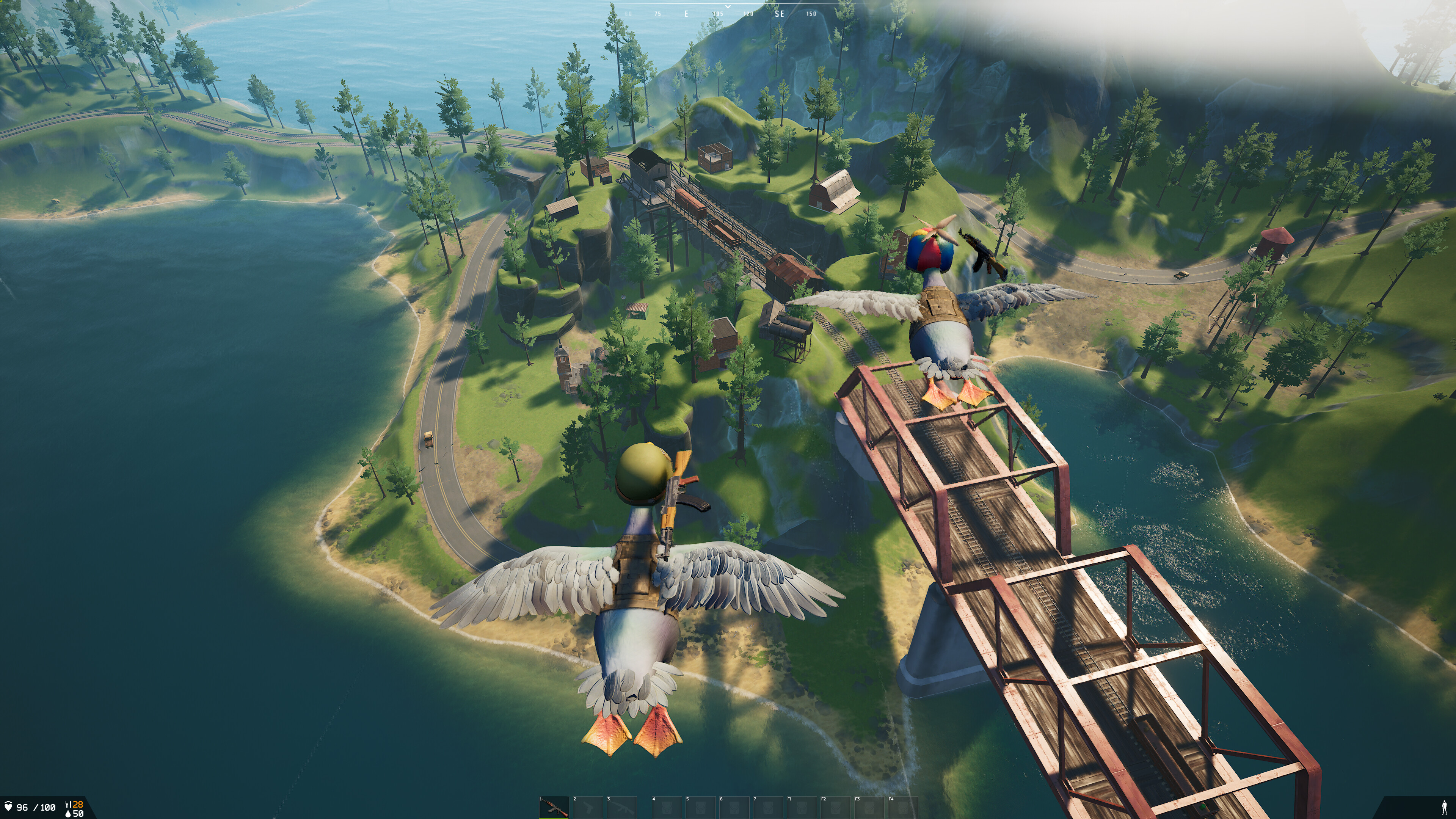
Game description: In Duck Haul, everyone is a duck working on a floating dock that sinks, breaks, and moves all the time. The mission is simple: transport ridiculously large or heavy objects without dropping them in the water.
The problem is that moving them requires several ducks to grab them at the same time, and coordinating is chaotic. In addition, each duck has a weird ability that either helps or complicates things (one is muscular but slow, another is slippery, another screams too loudly, etc).
The rounds are short, and literally anything can go wrong: if you succeed, the object reaches the boat; if not, it can fall, bounce, or sink half the dock.
The goal is to move the object in time without physics, the dock, or your friends ruining everything.
Image credits: https://www.gamesradar.com/games/survival/one-of-steam-next-fests-biggest-survival-games-makes-a-compelling-promise-imagine-dayz-or-rust-but-youre-a-duck/ (It was the closest thing I found to use as a reference).
Género: Party Game
Plataforma: PC / Consolas
Público objetivo: Jugadores que disfrutan el caos, las mecánicas raras y reírse de cosas que ni deberían ser un problema, pero lo son.
Descripción del juego: En Who Moved My Shadow, todos son patos en un lago dividido entre luz y sombra. En la luz todo normal, pero en la sombra es donde empieza el caos:
las sombras de los patos se mueven solas, como si tuvieran personalidad propia.
Cada pato tiene una sombra exagerada, gigante, dramática, y ninguna hace exactamente lo mismo que su jugador. A veces imitan, a veces se van por su cuenta, a veces se chocan con otras sombras puro caos.
Cada ronda tiene un objetivo distinto: esconderse de un búho que solo ve sombras, competir por pan que aparece en zonas oscuras, llevar objetos sin que tu sombra los sabotee, o formar una figura usando solo las sombras.
Las sombras pueden empujar, fusionarse, activar cosas sin querer y asustar a otros jugadores.
El objetivo es completar los objetivos mientras tu propia sombra hace todo lo posible por arruinarte y las de los demás también.
Créditos de imagen: https://www.flickr.com/photos/matthileo/6799538888 (I mean, no es lo que estaba pensando, pero no encontré nada más para usar como referencia).
Genre: Party Game
Platform: PC / Consoles
Target audience: Players who enjoy silly, chaotic games that never turn out as they should.
Game description: In Duckline, everyone is a duck trying to make formations requested by The Great Heron: circles, arrows, hearts, spirals... things that sound simple, but the ducks slip, collide, and receive contradictory orders. All the controls are designed to make coordination difficult on purpose.
Each duck has a flaw: one only turns left, another falls asleep for a second, another pushes everyone around, another is afraid of water, etc.
Every so often, absurd events occur: bread rains down, a dog scares everyone away, a wave breaks the formation, or an NPC duck gets in the way.
The game doesn't ask you to do it perfectly; rather, it rewards you for disaster:
things like the most chaotic duck, the best attempt, the saddest formation, or the one that turned out well by pure luck.
Image credits: I couldn’t find any reference image that really matched what I was trying to show T_T